

Complete Smile Rebuild: Who Needs to Think About Implant-Based Full Mouth Rehabilitation
Complete Smile Rebuild: Who Needs to Think About Implant-Based Full Mouth Rehabilitation is a crucial question for many people dealing with severe dental issues.Dental implants are a contemporary and efficient way to restore the appearance and functionality of damaged or lost teeth through whole mouth rehabilitation. This comprehensive dental treatment can transform lives by offering a healthy, beautiful smile and improved oral health. This article will discuss the various facets of implant-assisted whole mouth rehabilitation, who can profit from it, and why it might be the best option for you.

1. What is Full Mouth Rehabilitation with Implants?
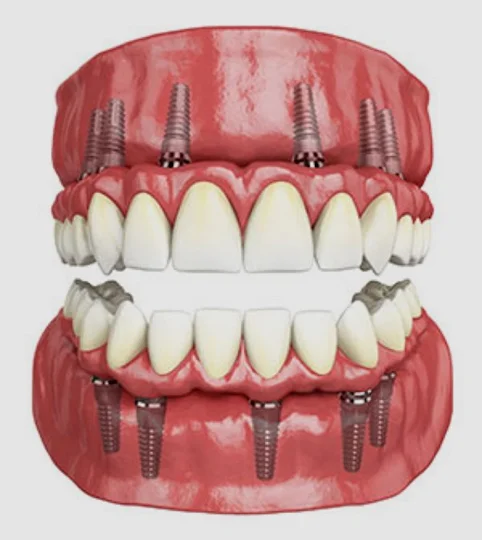
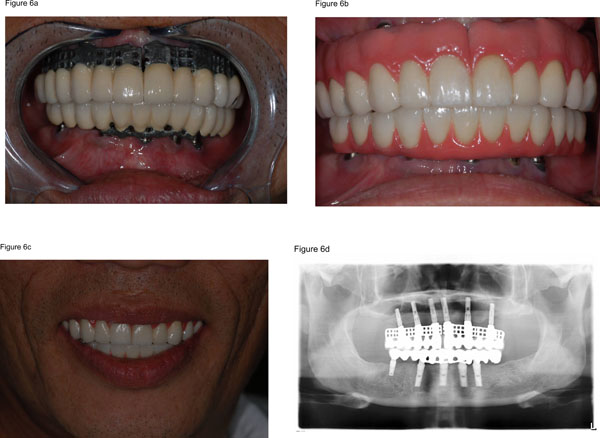
Rebuilding or replacing every tooth in the upper and lower jaws is part of whole mouth rehabilitation, sometimes referred to as full mouth restoration. The use of dental implants in this process has revolutionized the way dentists approach extensive tooth loss or damage. Implants serve as artificial tooth roots made of biocompatible materials like titanium, which integrate with the jawbone, providing a stable and permanent foundation for replacement teeth such as crowns, bridges, or dentures. This procedure does more than just improve appearance; it restores chewing ability, speech, and overall oral health.2. Who Should Consider Full Mouth Rehabilitation?
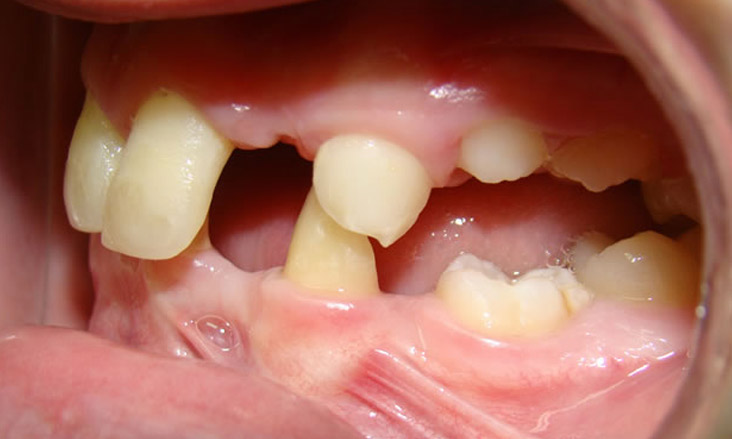
Many individuals may wonder, “Who needs a total smile rebuild?” Here are the common groups of people who should consider full mouth rehabilitation with implants:• Patients with multiple missing teeth: If you have lost many teeth due to decay, injury, or extraction, full mouth rehabilitation offers a way to replace them all effectively.
• Severe tooth wear or damage: Those with worn down teeth caused by grinding (bruxism), acid erosion, or trauma can benefit from restoration.
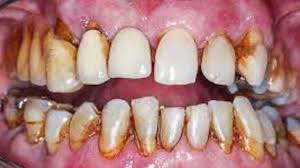
• Periodontal disease sufferers: Advanced gum disease can lead to tooth loss and jawbone deterioration, making implants a good option to restore dental structure.
• Individuals with failing dental restorations: If old crowns, bridges, or dentures no longer fit well or cause discomfort, a full rehabilitation might be necessary.
• Patients seeking cosmetic improvement: If you want to enhance the aesthetics of your smile along with function, this treatment can be customized to meet your needs.
3.The Process of Full Mouth Rehabilitation With Implants
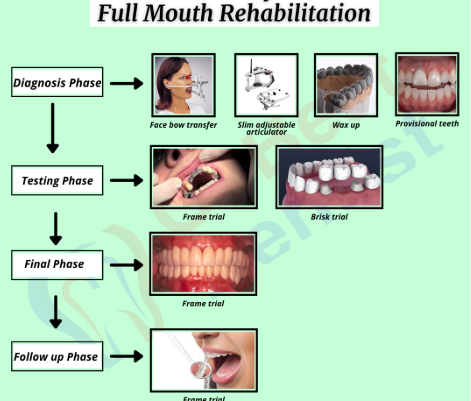
A complete smile makeover is a methodical procedure that calls for meticulous preparation and competent dental knowledge.• Consultation and Examination: Your dentist will conduct a thorough oral examination, including X-rays and 3D imaging, to assess bone health and plan treatment.
• Treatment Planning: The dental staff will create a customized rehabilitation plan based on your situation.
•Implant Placement: The implants are surgically inserted into the jawbone, usually under local anesthesia.
• Healing Phase: It takes several months for the implants to fuse with the bone, a process called osseointegration.
•Attachment of Prosthetics: After healing, custom-made crowns, bridges, or dentures are fixed onto the implants.
• Follow-up Care: Regular check-ups ensure the implants and restorations remain healthy and functional.
4. Benefits of Full Mouth Rehabilitation Using Implants
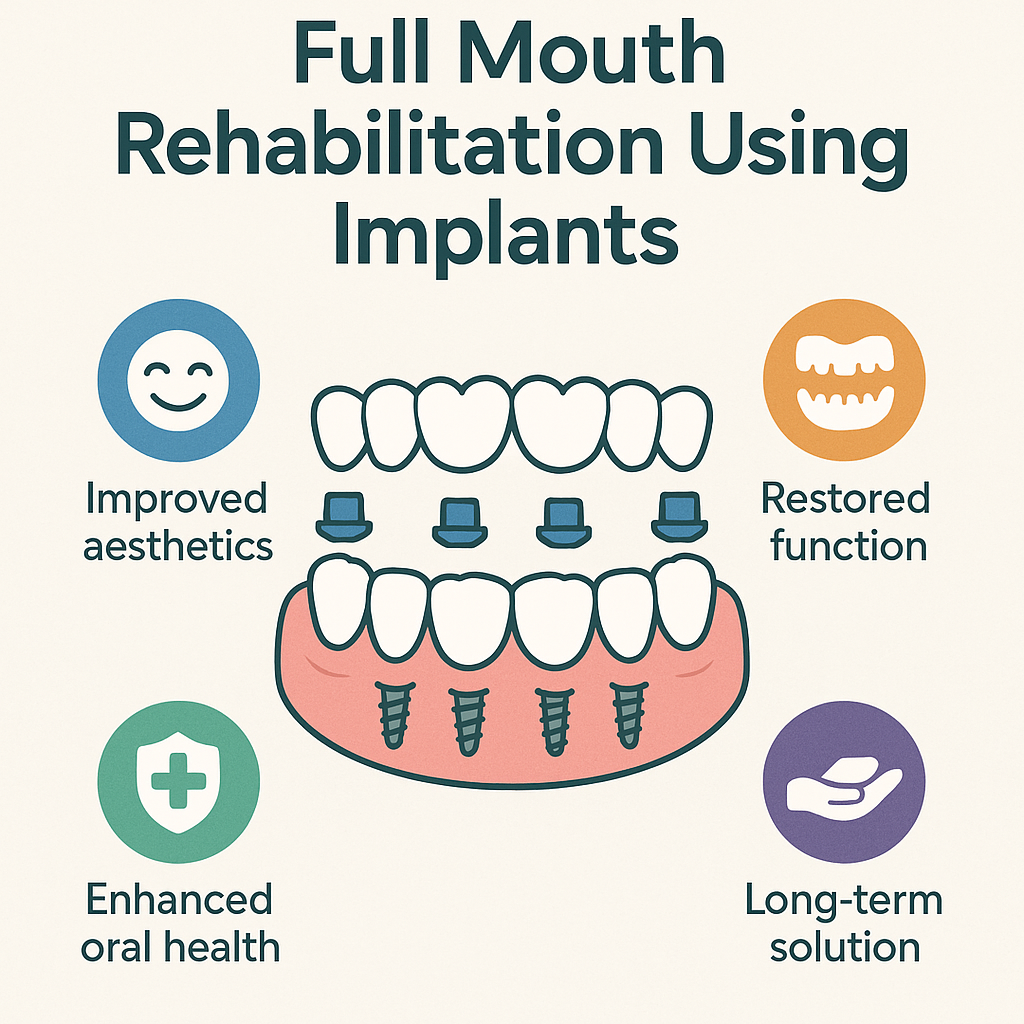
Choosing a total smile rebuild with implants offers numerous advantages over traditional dental solutions:• Permanent and Stable: Implants offer a snug fit in contrast to potentially slipping dentures.
• Increased Chewing Efficiency: Biting and chewing abilities are nearly restored by implants.
• Bone Preservation: Dental implants keep bone loss at bay by stimulating the mandible.
• Improved Appearance: They feel and appear just like real teeth.
• Better Speech: Stable implants help maintain clear speech.
• Long-lasting Solution: Implants can last a lifetime if properly maintained.
• Enhanced Self-Belief: A lovely grin improves social relationships and self-esteem.

5. Who is Not a Candidate for Full Mouth Rehabilitation?
While many can benefit from full mouth rehabilitation, certain conditions may affect candidacy:• Insufficient bone density: Without adequate jawbone, implants may not be feasible without additional bone grafting.
• Uncontrolled chronic diseases:Conditions like diabetes or heart disease must be well-managed.
• People who smoke a lot: Smoking raises the chance of implant failure and slows healing.
• Poor oral hygiene: Maintaining excellent oral care is vital to the success of implants.
• Certain medications or treatments: Patients undergoing chemotherapy or radiation therapy might need to delay treatment.
Your dentist will carefully evaluate these factors before recommending a full mouth rehabilitation plan.
6. Recovery and Aftercare
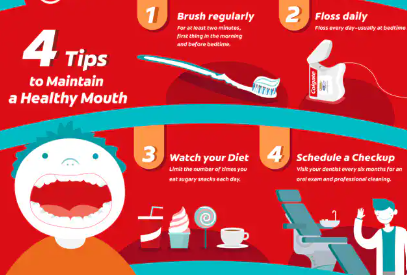
After receiving a total smile rebuild with implants, proper aftercare is crucial:• Maintain excellent oral hygiene by brushing and flossing regularly.
• Attend follow-up dental visits for cleaning and evaluation.
• Avoid hard or sticky foods immediately after surgery.
• Quit smoking to enhance healing and longevity of implants.
• Use any prescribed medications or rinses as directed. With consistent care, your implants and restored smile will stay healthy for years.
7. Full Mouth Rehabilitation with Implants at Dermadent
Dermadent, a leading dental clinic specializing in cosmetic and restorative dentistry, offers expert full mouth rehabilitation services with implants. Their experienced team uses the latest technology to ensure precise diagnosis and effective treatment planning. Patients benefit from personalized care and a comfortable treatment environment, making the total smile rebuild journey smoother and successful."Who should consider full mouth rehabilitation with implants?" is a common question. Dermadent’s specialists can guide you through the process, ensuring the best outcomes for your smile and oral health.