

Introduction
Wisdom teeth are the last set of teeth to develop, usually appearing in the late teens or early
twenties. While some people have enough space for these teeth to grow normally, others may
experience pain, swelling, infection, or difficulty opening the mouth. In such cases, wisdom
tooth extraction
in Pragathi Nagar may be recommended by a dentist.
Understanding the symptoms, extraction procedure, and recovery process can help you make an
informed decision and feel more comfortable about treatment.
01 What Is a Wisdom Tooth?
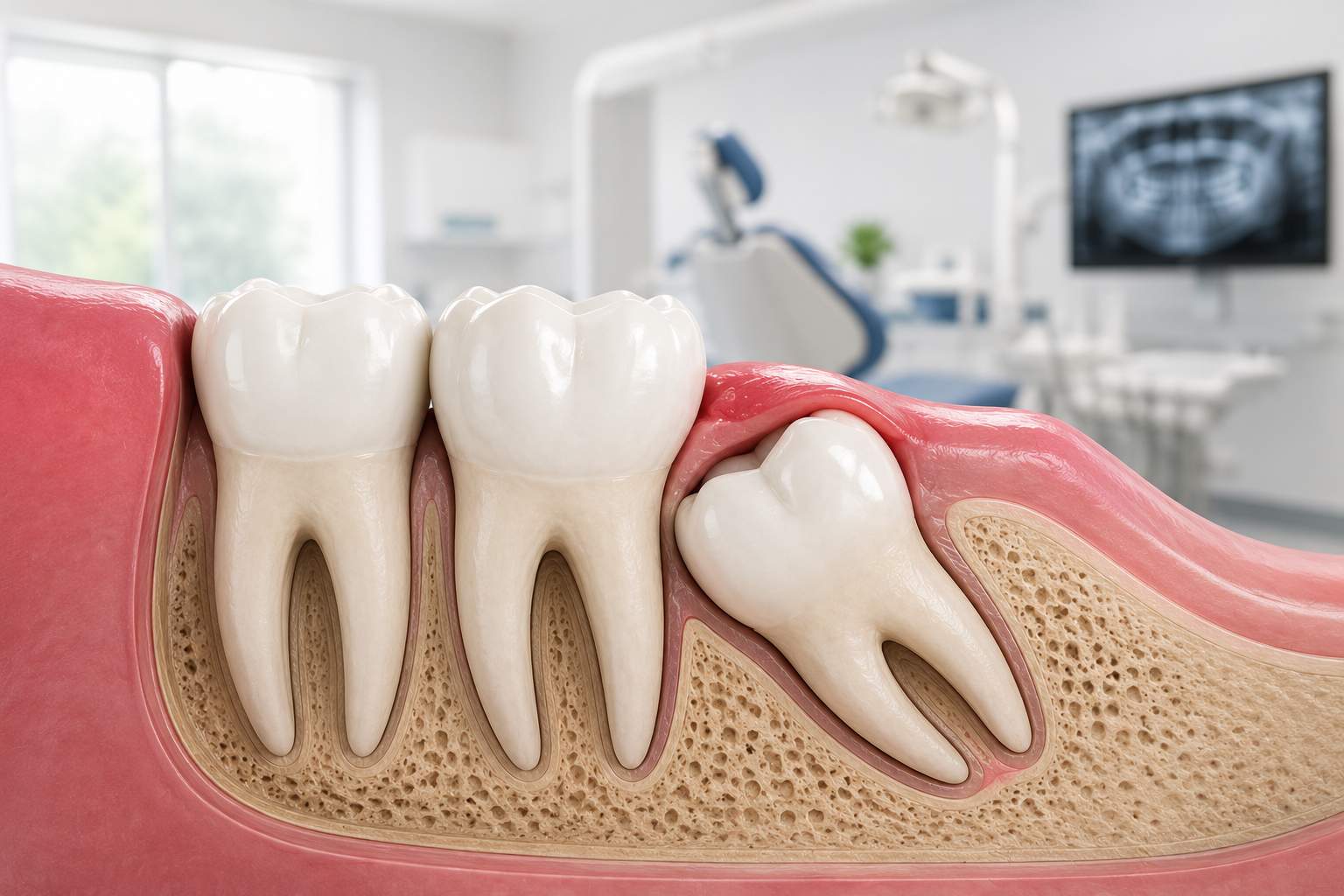
Wisdom teeth are the third molars located at the back of the mouth. They can sometimes
grow at an unusual angle or remain partly trapped under the gum. This is known as an
impacted wisdom tooth.
When there is insufficient space for proper growth, the tooth may
affect nearby teeth and gums. A dental examination and X-ray can help determine whether
extraction is necessary.
02 Symptoms That May Indicate a Problem
Not every
Wisdom Tooth needs to be removed. However, certain symptoms may indicate that the
tooth is causing problems.
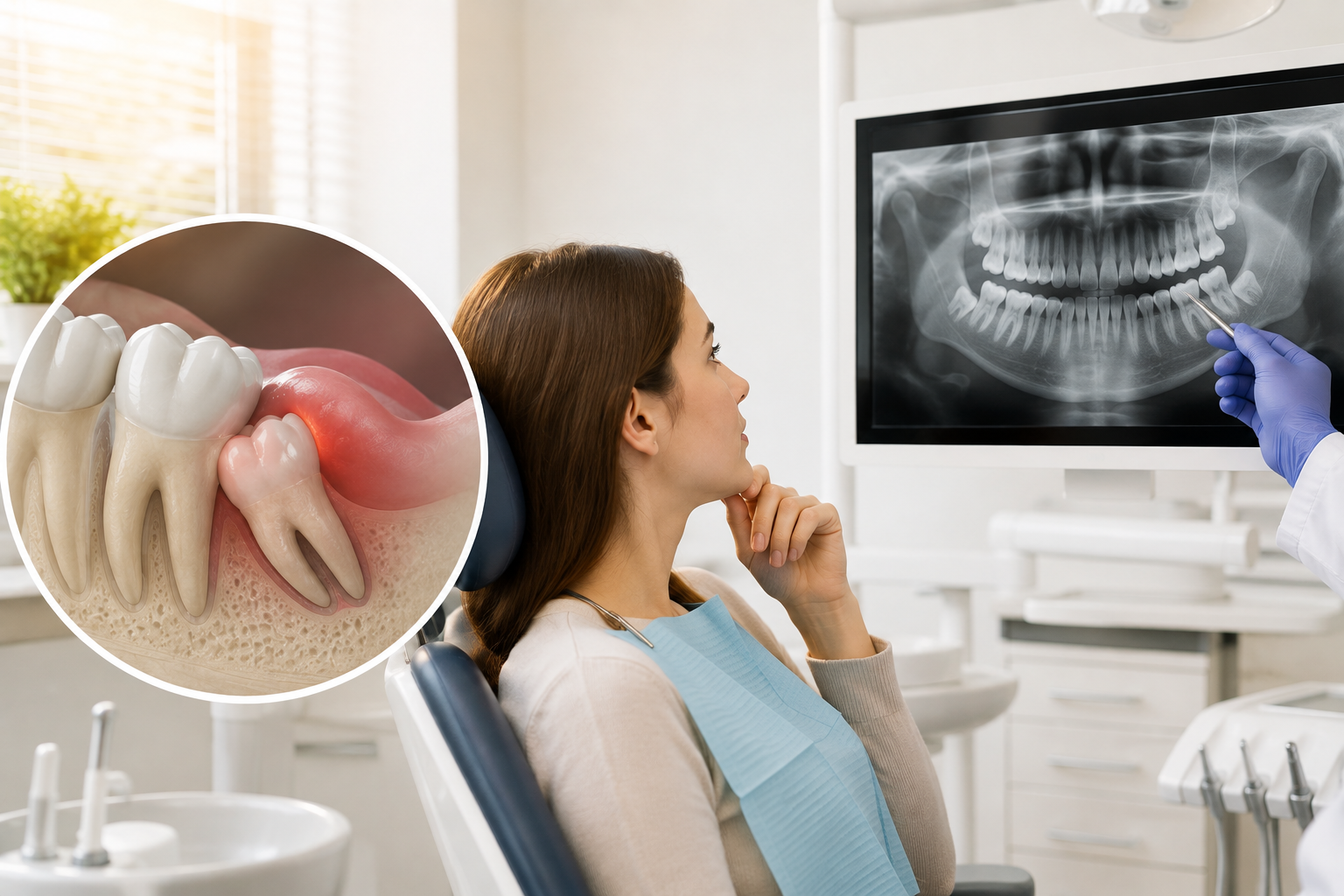
Common wisdom tooth symptoms include:
* Pain or tenderness at the back of the mouth
* Swollen or red gums around the tooth
* Difficulty chewing
* Bad breath or an unpleasant taste
* Food getting trapped around the tooth

03 Why Is Wisdom Tooth Extraction Recommended?
A dentist may recommend wisdom tooth removal when the tooth is impacted, infected,
repeatedly causing pain, or contributing to other dental problems.
Extraction may help prevent:
* Recurring gum infections
* Tooth decay in the wisdom tooth or adjacent tooth
* Gum disease around the affected area
* Damage to nearby teeth
* Cysts or other complications associated with impacted teeth
The need for extraction depends on the tooth's position, symptoms, and overall oral health.
04 Wisdom Tooth Extraction Procedure
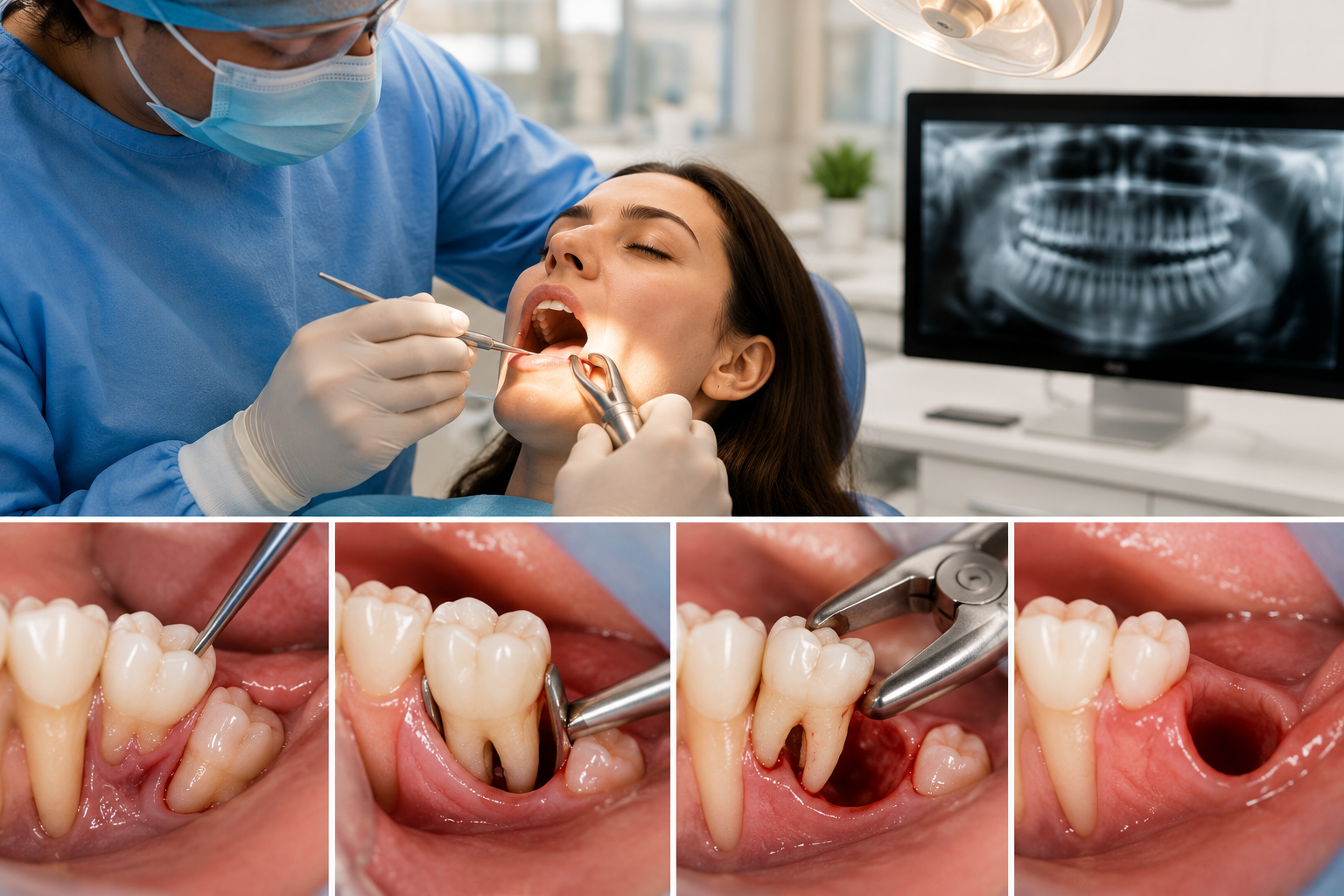
1. Dental Examination
The dentist examines your teeth and gums and may recommend a dental X-ray. This helps assess the
position of the wisdom tooth and its relationship with surrounding structures.
2. Local Anaesthesia
Before extraction, local anaesthesia is generally administered to numb the treatment area. This
helps minimize discomfort during the procedure.
05 Recovery Tips After Wisdom Tooth Removal
Do's
* Rest for the first day and avoid strenuous activity.
* Use an ice pack on the outside of the cheek to help reduce swelling.
* Eat soft foods such as curd, mashed foods, soups, or smoothies as advised.
Don'ts
* Avoid smoking or tobacco during recovery.
* Do not drink through a straw, as suction can disturb the blood clot.
* Avoid very hot, hard, or spicy foods initially.

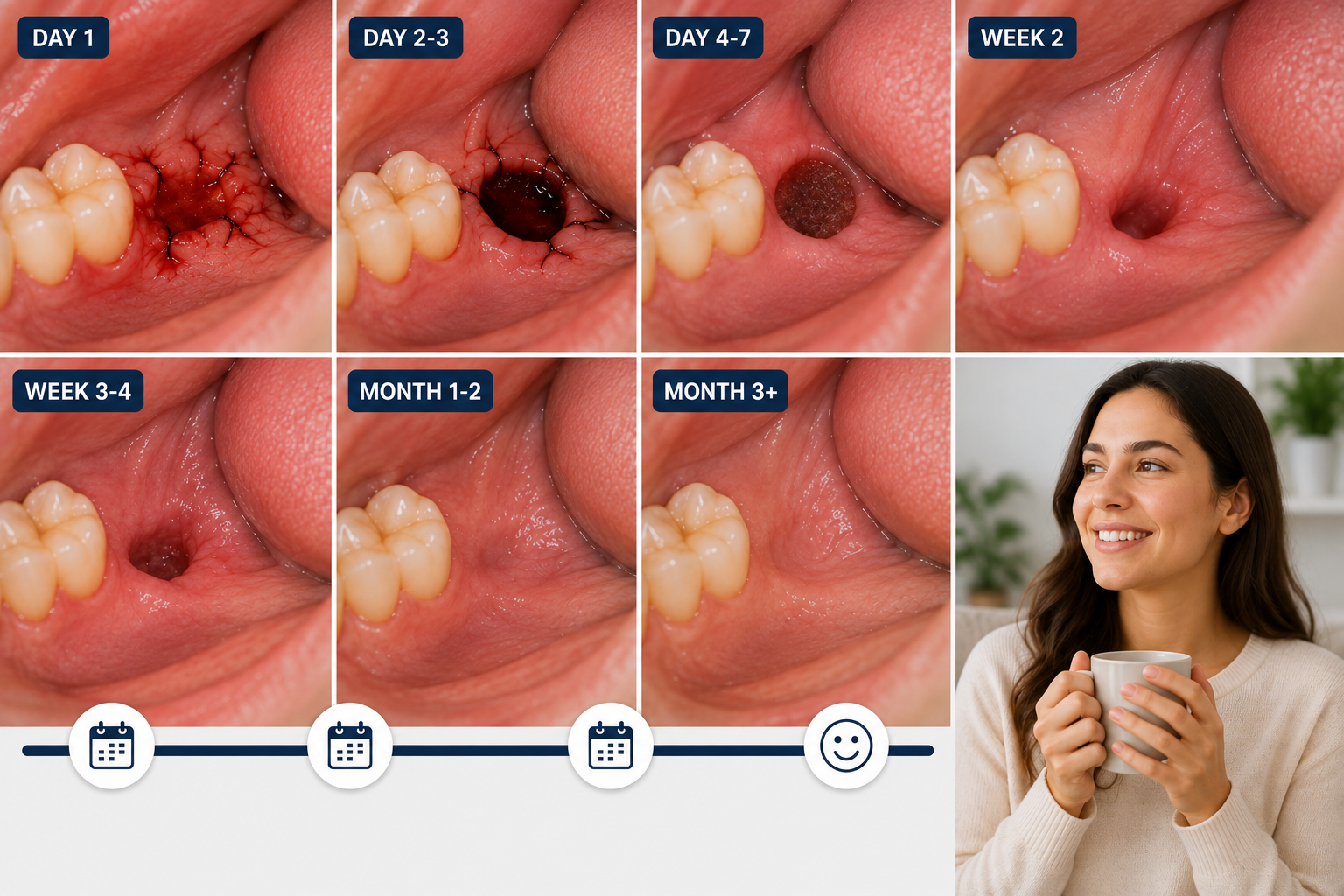
06 How Long Does Wisdom Tooth Extraction Take to Heal?
Recovery varies from person to person. Many people can return to normal daily activities within
a few days, although complete healing of the extraction site may take longer.
Following post-operative instructions, maintaining good oral hygiene, eating suitable foods, and
attending follow-up appointments can help support recovery.
07 Choosing a Dentist for Wisdom Tooth Extraction in Pragathi Nagar
Choosing the right dental professional is an important part of treatment. Look for a dental
clinic that provides a proper examination, explains the procedure clearly, follows appropriate
infection-control practices, and gives detailed aftercare instructions.
If you are experiencing persistent wisdom tooth pain or other symptoms, an early dental
evaluation can help identify the cause and determine the most appropriate treatment.

Conclusion
Wisdom tooth problems can affect eating, speaking, and everyday comfort. Recognizing the symptoms
early and getting a professional dental assessment can help prevent complications. Whether you have
an impacted wisdom tooth, recurring gum infection, or persistent pain, the right treatment plan
depends on your individual dental condition.
If you are looking for wisdom tooth extraction in Pragathi Nagar, consult a qualified dental
professional for an examination and personalized advice. For appointments or further information,
Contact Us at DermaDent and take the next step
toward better oral health.
Frequently Asked Questions
The area is numbed with anaesthesia during extraction, so you should not feel sharp pain during the procedure. Mild soreness after treatment is common.
The procedure can take anywhere from a few minutes to longer, depending on the tooth's position and whether it is impacted.
Yes, but soft and cool or lukewarm foods are generally easier to eat initially. Follow your dentist's specific dietary instructions
Mild pain and swelling often improve over several days. Recovery time varies depending on the complexity of the extraction and individual healing.
No. A wisdom tooth that is healthy, properly positioned, and easy to clean may not require extraction. Your dentist can determine whether removal is appropriate.